Beverage freezer not freezing: causes, lack of gas and solution
Does your beverage freezer turn on, the compressor runs, but the drinks aren't freezing like they used to? Perhaps the unit is running for hours, producing s…
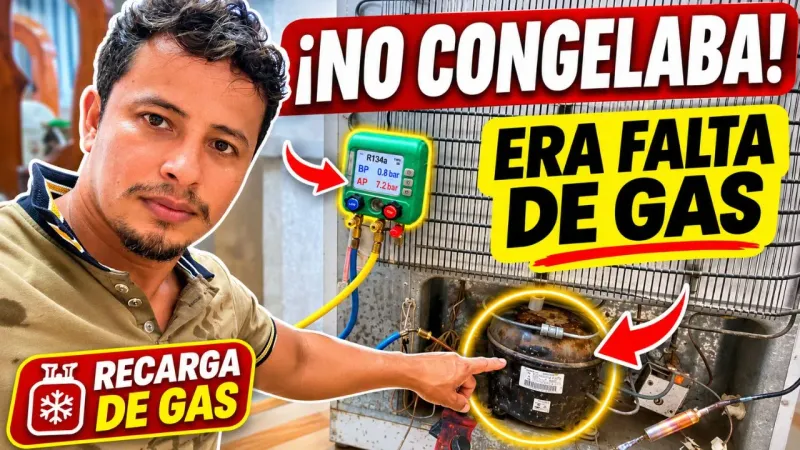
Does your beverage freezer turn on, the compressor runs, but the drinks no longer freeze like they used to? Perhaps the unit spends hours working, produces some cold, and still never reaches the temperature it needs.
One possible cause is a lack of refrigerant due to a leak in the refrigeration circuit . When the amount of refrigerant decreases, the evaporator may stop working correctly, and the unit loses its ability to remove heat from the interior.
However, it's not always a lack of refrigerant. A dirty condenser, a faulty fan, a poorly adjusted thermostat, or a blockage in the capillary tube can cause similar symptoms.
In this guide you will learn how to recognize the signs of low refrigerant, what to check before recharging the system, and how to properly fix this problem.
Why does a beverage freezer stop freezing?
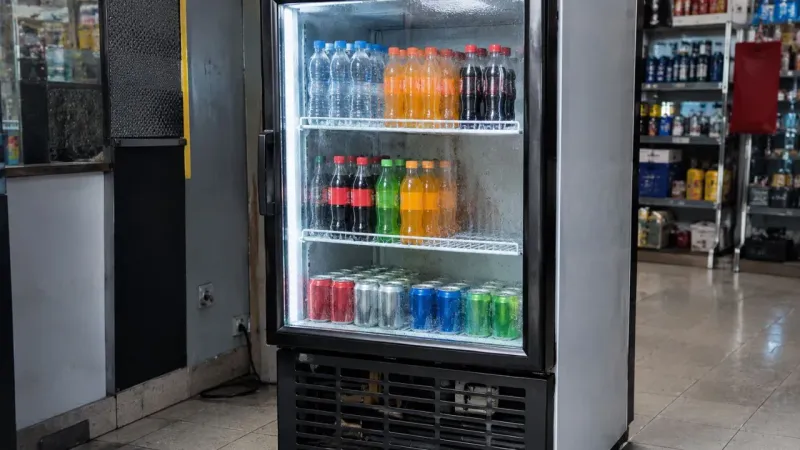
To understand the fault, you first need to know how the cooling system works.
A freezer uses a closed circuit composed mainly of four elements:
- Compressor: circulates the refrigerant and establishes the pressure difference necessary for operation.
- Condenser: releases the heat extracted from inside the equipment into the environment.
- Expansion system: You can use a capillary tube or another device that regulates the flow of refrigerant to the evaporator.
- Evaporator: absorbs heat from the compartment where the drinks are located.
When all these components are working correctly, the equipment can reach and maintain the temperature for which it was designed.
But if there is a leak and the refrigerant charge decreases, the amount circulating may be insufficient to utilize the entire surface of the evaporator.
The result is poor cooling.
First: Is your equipment a freezer or a beverage cooler?
This difference is fundamental.
A beverage cooler or display case may be designed to keep soft drinks, water, and other beverages chilled, generally at temperatures above 0°C.
In contrast, a freezer is designed to operate below the freezing point of water. Many freezers for storing frozen food operate at around -18°C, although the exact temperature depends on the model and its application.
Therefore, if you bought a commercial display case that operates between 2 and 8 °C, you shouldn't expect it to freeze the drinks.
Before troubleshooting, check the nameplate, the manual, and the operating temperature range.
7 signs your beverage freezer may be low on gas
A lack of refrigerant can present several symptoms. None of them, individually, confirms a leak, but observing them together helps guide the diagnosis.
1. The compressor works, but the drinks don't freeze.
This is one of the most striking signs.
The compressor remains on, but the unit does not reach the programmed temperature.
It can produce a slight cooling, enough to refresh some drinks, but it does not freeze them.
When the refrigerant charge is insufficient, the cooling capacity decreases and the equipment may need to operate for extended periods.
2. The evaporator only forms ice in a small part
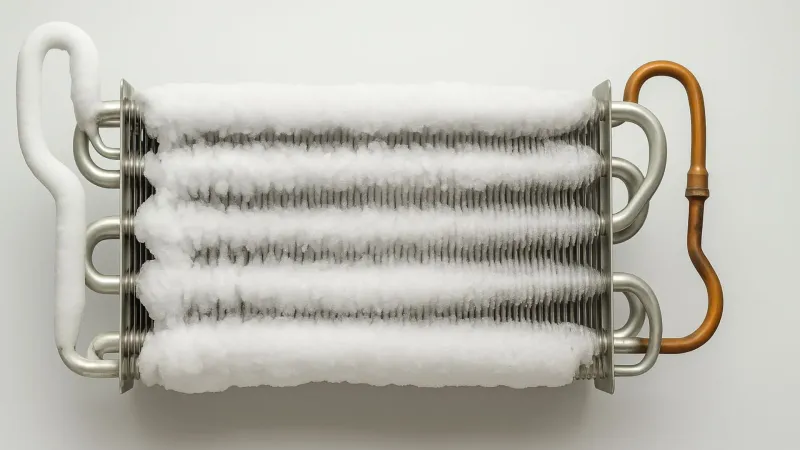
This symptom is especially important in systems that use capillary tubing.
Under certain conditions, an evaporator with insufficient refrigerant supply may show frost only near the inlet.
The rest of the surface remains relatively dry or does not reach the expected temperature.
This may indicate an insufficient refrigerant charge, although it is also compatible with a restriction in the capillary tube or the filter drier.
You shouldn't add refrigerant just because ice appears at the evaporator inlet.
First, we need to determine why the system is not adequately feeding its entire surface.
3. The compressor runs for a long time without stopping
Normally, the control system stops or regulates the operation of the compressor when the set temperature is reached.
If the freezer loses its cooling capacity, it may continue to operate for extended periods.
This increases electricity consumption and can accelerate the wear and tear of some components.
However, continuous operation can also be due to a faulty thermostat, high ambient temperature, excessive beverage load, or problems with the condenser.
4. The indoor temperature drops very slowly
A freezer with a lack of refrigerant can take much longer than usual to recover its temperature after the door is opened or products are placed inside.
For example, drinks that used to cool down in a reasonable amount of time now stay lukewarm for hours.
To check this, use a suitable thermometer and record the internal temperature during operation, following the manufacturer's test conditions.
5. The suction pipe does not have the expected temperature
The suction pipe carries the refrigerant returning from the evaporator to the compressor.
Its temperature depends on the refrigerant used, the thermal load, the working pressures, and the system design.
When there is insufficient load, the return air may have a different temperature than expected.
But touching a pipe and checking if it's cold isn't enough to know if there's a gas shortage.
To interpret it correctly, you have to measure the temperature and relate it to the evaporation pressure and the superheating.
6. The working pressures are abnormal
In some equipment, an insufficient load can result in lower than expected suction pressure.
However, there is no universal pressure that is valid for all freezers.
The value depends on the type of refrigerant, the evaporation temperature, the thermal load, and the operating conditions.
Low pressure can also indicate a blockage or insufficient evaporator supply due to other causes.
Therefore, a pressure gauge alone does not confirm a leak.
7. Oil stains are observed near the connections
In certain cases, a coolant leak can leave traces of oil on joints, pipes, or circuit components.
This occurs because small amounts of compressor oil can be displaced along with the refrigerant.
The presence of oil is a clue that warrants inspection.
However, an old stain or external residue does not necessarily confirm that there is an active leak.
The verification must be carried out using appropriate detection methods.
Why does a freezer lose refrigerant gas?
A common question is whether the gas runs out with use.
The answer is that the refrigerant should not be consumed during normal operation of the equipment .
It circulates constantly within a closed system and participates in a process of evaporation and condensation.
If the load decreases, there is usually a leak or a loss has occurred during a previous intervention.
Leaks in welds and connections
Pipe joints can present problems due to vibrations, manufacturing defects, previous interventions, or mechanical stress.
A deteriorated joint can allow a gradual loss of refrigerant.
Corrosion in pipes
Some pipes or evaporators may deteriorate due to corrosion.
Humidity, chemical agents, and environmental conditions can contribute to the problem.
When corrosion punctures a pipe, the coolant begins to escape.
Compressor vibrations
Normal compressor vibrations should be absorbed by the supports and the piping arrangement.
However, if there is a poorly secured pipe, a faulty support, or continuous contact between components, fatigue damage may occur.
Previous repairs poorly done
A connection without the correct seal, a faulty weld, or a leaking service valve can cause losses after a repair.
In these cases, adding more refrigerant without correcting the problem only offers a temporary solution.
What to check before performing a gas recharge
When a freezer is not freezing, the diagnosis should begin with the simplest checks.
Check the programmed temperature
Check that the controller is set to the correct temperature.
Also check if the unit is performing a normal defrost cycle or if it displays any error codes.
Check the compressor's operation
Listen to see if it starts and keeps running.
If it only clicks and tries to start without success, the problem may be in the electrical system and not the refrigerant charge.
It is also important to distinguish between a compressor that works and one that is actually compressing efficiently.
Inspect the condenser
A condenser covered in dust or grease makes it difficult to remove heat.
This can reduce the freezer's performance and cause prolonged operation.
With the equipment unplugged, clean accessible surfaces following the manual.
Check the fans
If the freezer incorporates a fan in the condenser or evaporator, check that it works when it should.
A faulty fan can cause a temperature problem even without a leak.
Check that the door is closed
Damaged packaging allows continuous entry of hot air and moisture.
The freezer has to work harder to compensate for that heat input.
Avoid overloading the equipment
Placing too many drinks, especially if they arrive hot, can considerably prolong the cooling time.
It is also important to keep the grilles and air circulation ducts clear.
If after these checks the compressor is working, but the equipment still does not reach its temperature, it is advisable to investigate the cooling circuit.
How to tell if there is a gas shortage or a blockage in the capillary tube
This is one of the most important parts of the technical diagnosis.
A partial blockage of the capillary tube or the dehydrating filter can produce symptoms very similar to those of an insufficient charge.
In both situations, the evaporator may receive less refrigerant than necessary.
Therefore, finding low suction pressure and localized frost does not automatically confirm that there is a leak.
The difference must be established through several checks.
| Testing | Lack of refrigerant | Restriction in capillary or filter |
|---|---|---|
| Cooling capacity | Decreased | Decreased |
| Suction pressure | It can be low | It can be low |
| Localized frost | It may occur | It may occur |
| Overheating | It can increase | It can increase |
| Subcooling | It can be low | It can remain the same or increase before the restriction |
| Leak detection | You can confirm loss | There is not necessarily a leak |
| Abnormal temperature drop in filter or line | It's not the main signal | You can indicate a restriction |
The interpretation of these measurements depends on the equipment design and the actual operating conditions.
In small capillary tube systems, there may also be limitations in measuring certain variables.
A common mistake is charging refrigerant when the filter or capillary tube is actually clogged.
This does not correct the restriction and may cause an overload when the circuit resumes allowing normal refrigerant flow.
How to fix a lack of gas in a beverage freezer
When checks confirm that the equipment has lost refrigerant, the repair must first correct the cause of that loss.
A professional repair of the sealed circuit typically involves the following steps.
1. Identify the type of refrigerant
The first thing to do is check the nameplate.
In commercial refrigeration, different refrigerants can be found, such as R134a, R404A, R290 and others, depending on the equipment.
Each one has different properties and working conditions.
They should not be exchanged simply because they allow for the production of cold.
Special attention should be paid to refrigerants R290 and R600a, which are flammable and require specific safety procedures.
2. Locate the leak
The technician must investigate the connections, pipes, and other components of the circuit.
You can use a suitable electronic detector, compatible leak detection methods, or leak testing.
In a pressure test, an appropriate test gas, such as dry nitrogen, is used, respecting the manufacturer's pressure limits.
Oxygen should never be used to pressurize a refrigeration circuit.
3. Repair the leak point
The solution depends on where the leak is located.
In some cases, a joint can be repaired or a section of pipe replaced.
If the leak is in a badly damaged evaporator or in an inaccessible area, it may be necessary to replace a component or assess whether it is economically worthwhile to repair the equipment.
Welding and system opening operations require specific preparation, especially if using flammable refrigerants.
4. Check the filter drier
The filter helps retain moisture and particles within the circuit.
When the system is opened for repair, it may be necessary to replace it according to the specifications and service procedure.
A damaged or restricted filter can affect the flow of coolant.
5. Perform a leak and vacuum test
Once the circuit has been repaired, it is necessary to check for leaks.
The evacuation is then carried out using a vacuum pump and appropriate equipment.
The goal is to remove air and moisture before charging the refrigerant.
The quality of the vacuum must be checked with the appropriate instrument and under the procedure indicated for the system.
Simply observing the manifold pressure gauge does not guarantee that the moisture has been properly removed.
6. Charge the correct amount of refrigerant
This step is essential to restore the freezer's performance.
The quantity must be determined using the manufacturer's technical information and the corresponding loading method.
In equipment with a specified load in grams, a refrigeration scale is used to control the amount introduced.
It is not correct to charge refrigerant until a randomly chosen pressure is reached.
An excess of refrigerant can also cause malfunctions and put the compressor at risk.
You can learn about other symptoms of an incorrect charge in our article on what happens when a refrigerator has excess refrigerant gas .
7. Check the final operation
After the repair, the technician must check that the equipment can recover and maintain its temperature.
You should also check the electrical consumption, operating temperatures, condensation and evaporation conditions, and the absence of new leaks.
It is not enough to simply observe that a pipe begins to cool down.
The real test consists of verifying that the freezer functions correctly under normal conditions of use.
How many grams of gas does a beverage freezer contain?
There is no universal quantity.
Two freezers can have a similar internal capacity and yet use different refrigerant charges.
The amount depends on factors such as the design of the evaporator, the condenser, the type of compressor, the length of the pipes, and the refrigerant used.
It is recommended to consult the equipment's specifications plate.
For example, if a manufacturer specifies a load of 180 grams, that amount corresponds to the indicated design, but it does not mean that another freezer of the same size will use exactly the same amount.
Nor should the quantity of a previously repaired unit be used as a universal reference for other models.
What pressure should a beverage freezer display?
The working pressure depends mainly on the refrigerant, the evaporation temperature, and the operating conditions.
Therefore, values such as 0, 5 or 10 PSI cannot be interpreted as normal or abnormal without knowing the system.
A suction pressure close to 0 PSI gauge can occur in certain refrigeration applications. Under other conditions, it could indicate a problem.
The same applies to the pressure that appears when the equipment is turned off.
Static pressure depends on the refrigerant and the system temperature, and does not allow you to determine how many grams it contains on its own.
To make a reliable diagnosis, the pressure must be analyzed along with the temperatures, electrical consumption, and evaporator behavior.
Adding refrigerant simply because the gauge shows a low reading can worsen the problem.
Can a lack of gas damage the compressor?
Insufficient load can lead to unfavorable operating conditions.
When the equipment loses its ability to cool, the compressor may remain on for extended periods.
High discharge temperatures and internal cooling conditions different from those specified by the manufacturer may also occur.
Over time, these situations can affect the compressor's lifespan.
But it doesn't mean that all the equipment lacking gas has a damaged engine.
If the compressor is still working properly and the fault is detected in time, it may be possible to restore the freezer's performance by repairing the leak and restoring the correct refrigerant charge.
Mistakes to avoid when a freezer isn't freezing
An incorrect repair can cause the problem to reappear or cause further damage.
The most important mistakes are:
- Add refrigerant without checking for leaks.
- Mistaking a blocked capillary tube for a lack of gas.
- Using a refrigerant other than the one specified without an approved conversion procedure.
- Loading the system without controlling the quantity when the procedure requires doing it by weight.
- Omit leak testing and evacuation.
- Ignore the condenser, the fans, or the control system.
- Handling flammable refrigerants without proper training and tools.
If you have no experience working with refrigeration circuits, avoid drilling pipes, installing makeshift valves, or tampering with the sealed system.
These operations can cause injuries, fires, or costly damage.
How much does it cost to repair a beverage freezer that isn't freezing?
The price depends on the breakdown and the work required.
It doesn't cost the same to correct a poorly adjusted thermostat as it does to locate a leak, replace an evaporator, or repair a circuit obstruction.
Other factors include the refrigerant used, the size of the equipment, the availability of spare parts, and the location of the technical service.
Before accepting a quote, it's advisable to ask what fault was found, what components need repair, and if the system's watertightness will be checked.
If the diagnosis indicates a lack of refrigerant, ask for an explanation of where the leak occurred.
Refilling the freezer without repairing the leak may cause it to stop cooling again.
Frequently asked questions about beverage freezers that don't freeze
1. Why does my beverage freezer cool but not freeze?
This could be due to insufficient refrigerant charge, an air circulation problem, a dirty condenser, a faulty thermostat, or a restriction in the system. First, you should check that the unit is designed for freezing and that its set temperature is correct.
2. How can I tell if my freezer is low on gas?
Signs may include insufficient cooling, prolonged compressor operation, and localized frost on a small area of the evaporator. However, to confirm a leak, technical tests are necessary to check for a leak.
3. Why is the compressor running but the freezer isn't freezing?
Because the compressor's operation doesn't guarantee that the system is producing the necessary cooling. There could be a leak, a blockage, a compression problem, insufficient ventilation, or another malfunction.
4. Does the gas in a freezer run out over time?
It shouldn't. In a closed, leak-free system, the refrigerant can remain for the entire lifespan of the equipment. If the charge decreases, you need to investigate where it's leaking from.
5. Is it possible to charge a freezer with gas without creating a vacuum?
The correct intervention depends on the system's condition and the service procedure. When the circuit is opened, proper evacuation must be performed before recharging. Failure to do so can leave air and moisture inside, impairing its operation.
6. Why does my freezer only make ice at the evaporator inlet?
Insufficient refrigerant supply may be due to a low charge or a restriction. Adding refrigerant without first checking the capillary tube, filter, and operating conditions is not recommended.
7. How long does it take to freeze after a repair?
It depends on the size of the equipment, the ambient temperature, the quantity of beverages, and the system's capacity. The check should be based on the temperature change and whether the freezer reaches the value specified by the manufacturer.
8. What happens if too much gas is charged into a freezer?
An excessive charge can alter pressures, temperatures, and operating conditions. Under certain circumstances, it increases the risk of liquid refrigerant returning to the compressor. The charge must be adjusted according to the correct procedure.
9. Is it normal for a freezer's compressor to run all day?
It can stay on for extended periods when the equipment is under a heavy heat load or is cooling down. But if it never reaches the programmed temperature, it needs servicing.
10. Is it worth repairing a beverage freezer that's low on gas?
It depends on the location of the leak, the condition of the compressor, and the cost of repair compared to the value of the equipment. When the problem is in an accessible joint and the other components are functioning correctly, repair can be a reasonable option.
Conclusion
If your beverage freezer isn't freezing, a lack of refrigerant is one of the causes you should investigate, especially when the compressor is running continuously and the evaporator is not cooling sufficiently.
But before performing a gas recharge, it is necessary to rule out ventilation problems, temperature control and obstructions.
The correct solution is not simply to add refrigerant: first, you have to identify the cause of the failure, repair it, and verify that the equipment recovers its performance.
Is your beverage freezer only cooling slightly, forming ice only on part of the evaporator, or not cooling at all? Share the brand, model, refrigerant type (indicated on the label), and any symptoms you're experiencing in the comments.