Why does my refrigerator cool but not freeze?
Is your refrigerator cooling but not freezing? Discover the most common causes, practical solutions, and when you should call a professional technician.
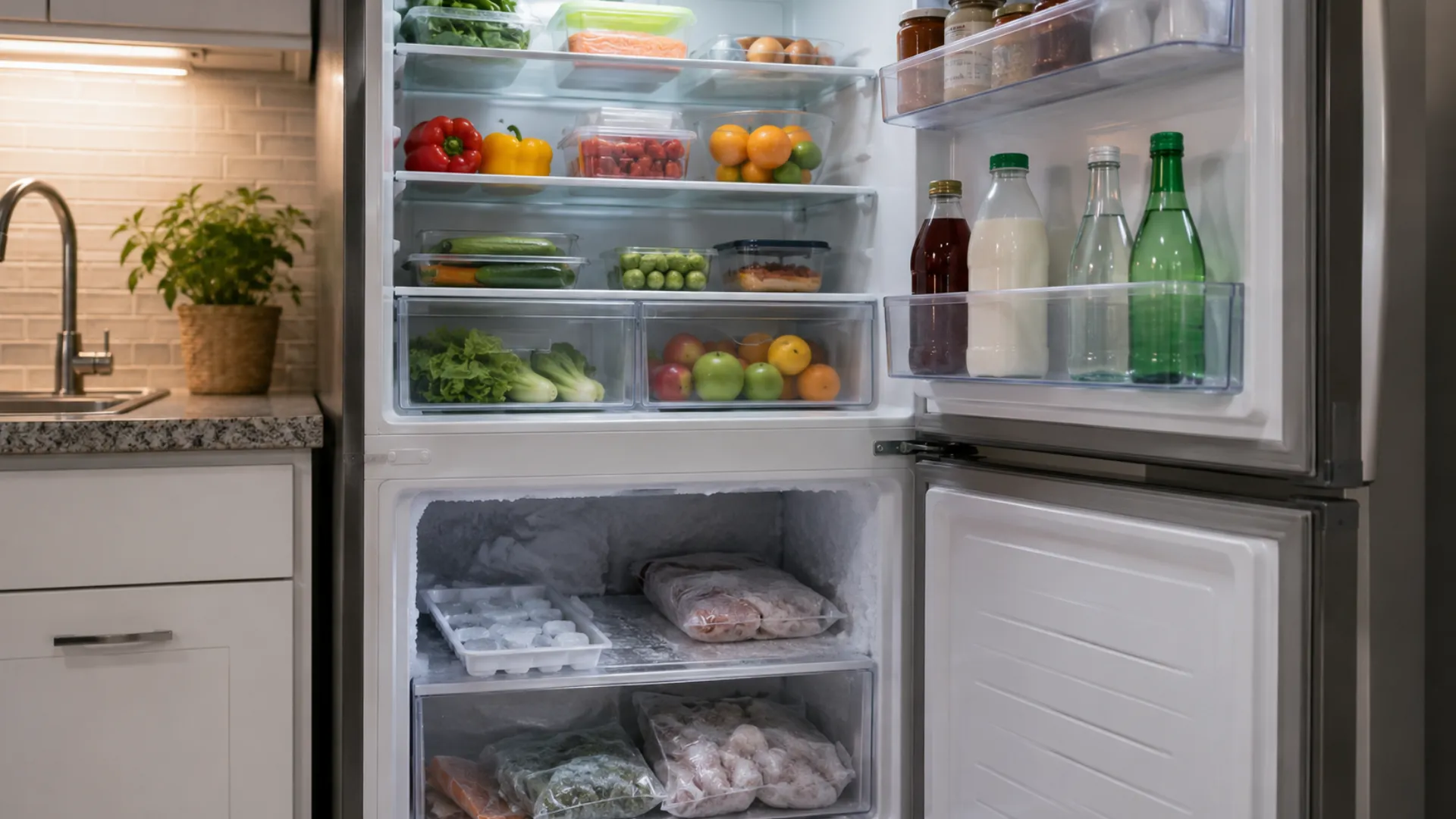
Is your refrigerator cooling but not freezing properly? This is a fairly common problem and doesn't always mean the compressor is damaged or that you need to buy a new unit. In many cases, the problem can be related to poor air circulation, excessive ice buildup, dirt in the condenser, faulty sensors, or a refrigerant leak.
When a refrigerator is working properly, the freezer should reach temperatures close to -18°C, while the refrigerator compartment is maintained between approximately 2°C and 5°C. If the food is cold, but the water doesn't freeze or the meat starts to thaw, there is a problem that should be checked as soon as possible.
Below, you will learn the main reasons why a refrigerator cools but doesn't freeze, and what you can do to fix the problem.
The cause depends on the type of refrigerator, how long it has been in use, and the symptoms it exhibits. A refrigerator that cools poorly in both compartments is not the same as one that keeps the bottom cold but fails to freeze in the top.
Before replacing components, it is advisable to check the temperature, listen to the operation of the compressor, and check for ice buildup on the inside panel of the freezer.
Incorrect temperature setting
One of the simplest causes is an incorrect setting. Some people accidentally lower the cooling power by moving the control while cleaning the refrigerator or rearranging food.
Check that the appliance is not set to energy-saving, vacation, or minimum cooling mode. On digital models, select approximately -18°C for the freezer and between 3°C and 4°C for the refrigerator.
After changing the settings, wait 12 to 24 hours before checking the result. The temperature doesn't change immediately, especially when the appliance is full of food.
Excess food in the freezer
An overfilled freezer can prevent proper air circulation. While adding more items might seem to help maintain the temperature, blocking the ventilation grilles can actually have the opposite effect.
Do not place bags, containers, or food directly against the air vents. Leave space between items and avoid completely covering the back wall. Air needs to circulate around the food for even freezing.
The problem can also occur when the refrigerator is completely empty, because it loses temperature more quickly each time the door is opened. Ideally, you should maintain a balanced load.
Ice buildup on the evaporator
If you have a No Frost refrigerator and notice a thick layer of ice on the inside wall of the freezer, there is probably a problem with the defrosting system.
Behind the panel is the evaporator, which is where the cold is generated. When it's completely covered in ice, airflow is restricted. The refrigerator may continue to cool slightly, but it no longer reaches the temperature necessary for freezing.
This fault can be caused by the defrost heater, the sensor, the thermal fuse, the bimetal thermostat, or the electronic control board. Unplugging the refrigerator for 24 hours may melt the ice and temporarily restore operation, but it does not resolve the underlying cause.
If ice reappears after a few days, the defrosting system will need to be checked.
Damaged evaporator fan
In frost-free refrigerators, the evaporator fan distributes cold air from the freezer to the different compartments. When this fan stops, the temperature becomes uneven.
To check, open the freezer door and press the door-close switch. On many models, you should hear the fan running after a few seconds. If it doesn't spin, makes noise, or moves slowly, it may be blocked by ice or have a damaged motor.
Do not insert tools or attempt to move the blades while the appliance is plugged in. Unplug the refrigerator first to avoid accidents.
Condenser full of dust
The condenser releases the heat that the refrigerator extracts from its interior. Depending on the model, it may be located at the back or underneath the unit.
When it fills with dust, grease, or lint, the refrigerator runs longer and loses cooling capacity. The compressor can overheat, and the freezer stops reaching sub-zero temperatures.
Unplug the appliance and carefully clean the condenser with a soft brush or vacuum cleaner. Also, check that there is enough space between the refrigerator and the wall to allow for ventilation.
This cleaning should be done several times a year, especially in homes with pets or in kitchens where grease accumulates.
Damaged door seal
A door that doesn't close properly allows a constant flow of warm air and humidity. This forces the refrigerator to work harder and can cause ice to build up in places where it shouldn't.
Check if the gasket is torn, warped, peeling, or dirty. You can place a sheet of paper between the door and the cabinet. If the paper comes out easily when the door is closed, the gasket may not be sealing properly.
Clean the rubber seal with warm, soapy water. If it's badly worn, it will need to be replaced. Also, check that any containers or food items aren't preventing the door from closing completely.
Defective temperature sensor or thermostat
The temperature sensor tells the electronic control board when to turn the compressor on or off. If it sends an incorrect reading, the refrigerator may shut off before reaching the temperature needed for freezing.
In older models, this function may depend on a mechanical thermostat. When the thermostat fails, the compressor may run for very short periods, not start at all, or run continuously.
To confirm this fault, measurements should be taken with a multimeter, comparing the sensor's resistance to the temperature. Since the values vary depending on the brand and model, it is advisable to consult the manufacturer's technical information.
Lack of refrigerant gas
Another possible cause is a refrigerant leak. This is commonly known as "low refrigerant," although a refrigerator shouldn't normally lose refrigerant. If it is, it likely means there's a leak somewhere in the system.
Some common symptoms include the compressor running for many hours, little frost on the evaporator, insufficient cooling, and a return line that doesn't cool as it should.
Adding refrigerant without repairing the leak will only provide a temporary solution. The technician must locate the leak, repair it, replace the filter if necessary, evacuate the system, and charge it with the correct amount of refrigerant specified by the manufacturer.
Compressor with low capacity
The compressor may turn on and sound normal, but have lost internal power. In that case, it continues to run, although it fails to produce the pressure necessary for the refrigerator to freeze.
This failure usually occurs in old equipment, overheated compressors, or systems that have worked for a long time with ventilation problems.
To determine if the compressor is worn, pressures, power consumption, and system performance must be measured. Replacing it without a complete diagnosis is not recommended, as a capillary tube blockage can produce similar symptoms.
What to do when the refrigerator cools but doesn't freeze?
First, check the temperature settings, organize the food, and make sure the shelves aren't blocked. Then, clean the condenser and check that the door closes properly.
If you notice excessive ice buildup in the freezer, you can unplug the refrigerator for 24 hours with the doors open. Place containers or towels inside to collect the water, and do not use knives, screwdrivers, or any sharp objects to remove the ice.
If the problem returns quickly, the compressor does not stop, the fan does not work, or the equipment does not reach sub-zero temperatures, a technical diagnosis will need to be requested.
When should I call a technician?
You should consult a professional when it's necessary to disassemble the evaporator, check electrical components, detect leaks, or work on the refrigeration system. Handling pipes, refrigerant, electronic boards, or cables without experience can damage the equipment and pose a risk.
A correct diagnosis allows you to differentiate between a simple ventilation failure and a more expensive problem, such as a worn-out compressor or an internal leak.
Conclusion
When a refrigerator cools but does not freeze, the cause can range from an incorrectly set temperature to a malfunction in the defrost system, the fan, the sensors, or the refrigeration circuit.
Start by checking the simplest things: settings, food placement, condenser cleanliness, and door closure. If the problem persists, avoid replacing parts randomly. A technical inspection will pinpoint the exact cause and determine if repairing the refrigerator is worthwhile.
Frequently Asked Questions
Why does my refrigerator cool down in the bottom but not freeze in the top?
There may be ice buildup on the evaporator, a blocked fan, poor air circulation, or a failure in the refrigeration system.
How long does it take for a refrigerator to refreeze?
After plugging it in or defrosting it, it may take between 12 and 24 hours to reach its normal temperature. The time depends on the amount of food, the ambient temperature, and the condition of the appliance.
Does unplugging the refrigerator solve the problem?
It can provide temporary relief when ice is blocking the evaporator. However, if there is a fault in the heating element, sensor, or circuit board, the problem will return.
Can a refrigerator cool with little refrigerant?
Yes. When there is a partial loss of refrigerant, the equipment may produce some cold, but not reach the temperature necessary to freeze properly.