How to Install an Air Conditioner without a Vacuum Pump
Discover if it's possible to install an air conditioner without a vacuum pump, the traditional alternatives, and why the recommended method remains essential…
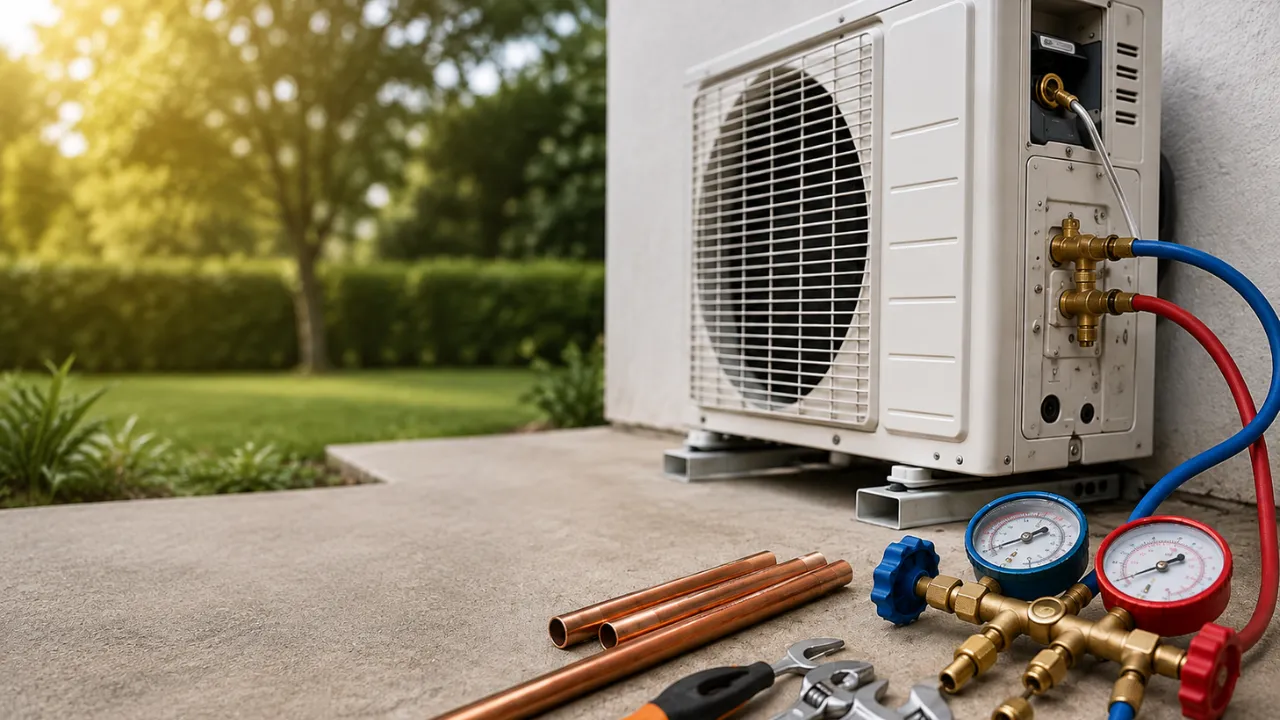
Installing an air conditioner without a vacuum pump is possible, but it's neither ideal nor recommended. The standard method for ensuring a clean and efficient system is to use a vacuum pump along with a vacuum gauge to guarantee the proper removal of air, moisture, and contaminants. Traditionally, before these tools were readily available, a technique known as purging or purging was used, which involves displacing the air trapped inside the refrigerant lines.
Although this alternative can help reduce the amount of air in the circuit, it does not offer the same control or guarantee the complete elimination of moisture and non-condensable gases, which can affect the performance and lifespan of the equipment.
Can it be installed without a vacuum pump?
For any air conditioning installation, it is recommended to use a vacuum pump along with a vacuum gauge to monitor the process. This allows for the safe and effective removal of air, moisture, and other contaminants from the system.
However, in the past, and in situations where this equipment was unavailable, purging or purging was used. This technique involves using the refrigerant itself to displace the air within the pipes before shutting down the system. While it can reduce the amount of air, it doesn't offer the precision or guarantee of a professional evacuation.
Why is it important to create a vacuum?
During the installation of an air conditioner, the following steps are taken to remove:
- Trapped air that can affect coolant circulation.
- Humidity that can cause corrosion and acid formation.
- Non-condensable gases that alter pressures and performance.
- Contaminants that damage internal components.
Removing these elements is vital to achieving optimal performance, maintaining adequate pressures, reducing energy consumption, and extending the equipment's lifespan.
Purge or sweep: traditional alternative
Purging, or purging, is a method primarily used when a vacuum pump was unavailable. It involves introducing pressurized refrigerant gas into the pipes to expel air and other unwanted gases.
This method attempts to solve the problem of trapped air, but it has significant limitations:
- It only partially displaces the air, without guaranteeing the total elimination of humidity.
- It does not allow measuring the quality of the vacuum achieved.
- It may not meet the manufacturer's specifications or current regulations.
For these reasons, although it can be useful in emergencies, purging does not replace a professional evacuation.
Purge or sweep vs. vacuum pump
Method | Operation | Advantages | Limitations | Recommendation -|-|-|-|- Purging | Displaces air using refrigerant gas | Requires no special equipment; fast | Does not remove moisture; no precise control | Only if there is no alternative; not recommended Vacuum Pump | Removes air, moisture, and contaminants with negative pressure | Ensures cleanliness; controlled with a vacuum gauge | Requires specialized equipment | Recommended and standard method
If you don't have a vacuum pump
Purge or sweep
It's the traditional and quick option for those without a pump. However, it's important to note that it doesn't guarantee the complete removal of moisture or unwanted gases, which could damage the system.
How was the purging or purging traditionally done without a vacuum pump?
The purging or purging technique was used especially in installations where a vacuum pump was not available. The objective was to take advantage of the small circulation of the refrigerant within the equipment itself to displace some of the air that had remained inside the pipes before the system was fully operational.
In general, the traditional procedure followed this logic:
- Check the connections:
- First, the copper pipes, flare joints, and service valves were checked to avoid starting with poor connections.
- Allow controlled entry of refrigerant:
- A limited amount of refrigerant was allowed to flow from the outdoor unit into the pipes with the intention of pushing the air contained within them.
- Move the air towards the service point:
- The coolant moved through the circuit and the air was directed towards an outlet of the system.
- Perform the purge:
- Part of the mixture was allowed to escape to try to expel the trapped air. Traditionally, some installers repeated this process several times to try to reduce the amount of remaining air.
- Shut down the system and check the connections:
- After the sweep, it was verified that the connections remained properly closed and without any signs of leakage.
- Put the equipment into service:
- Finally, the refrigeration circuit was enabled and the general operation of the air conditioning was checked.
Important: This method does not create a true vacuum and does not confirm that moisture has been removed from the system. Furthermore, it can cause refrigerant loss or release. Therefore, the most technically sound option currently available is to use a vacuum pump and vacuum gauge, following the manufacturer's specifications and applicable regulations.
Rent or get a pump
This is generally the best option to avoid future problems. Many shops and repair services offer vacuum pump rental or loan at a reasonable price.
Request only the vacuum service
If you don't want to or can't do the complete installation, you can hire a technician to perform only the vacuuming process with the appropriate equipment, guaranteeing the quality of the work.
How to properly perform a vacuum
- Check that the pipes and connections are clean and properly installed.
- Check that there are no leaks in the system.
- Connect the vacuum pump, manifold, and vacuum gauge correctly.
- Evacuate the system using the pump.
- Measure the vacuum level achieved with the vacuum gauge.
- Check that the vacuum remains stable for a while.
- Verify that the system is ready before putting it into service.
Microns and vacuum time
Microns are the unit of measurement that indicates the absolute pressure within a system under vacuum. They are more reliable than using only minutes because they accurately reflect the level of vacuum achieved.
The time required to create a vacuum depends on several factors: the length and diameter of the pipes, the humidity present, the pump capacity, the condition of the system, and the vacuum gauge reading.
What happens if there is air or moisture left?
- Decreased team performance.
- Abnormal pressures that affect the refrigeration cycle.
- Higher energy consumption.
- Internal contamination that can cause failures.
- Reduction in the lifespan of the air conditioner.
How to check that it turned out well
- Check for leaks.
- Check that the system is draining correctly.
- Verify that the equipment cools properly.
- Hearing unusual noises or vibrations.
- Compare the amperage with the specifications on the nameplate.
- Confirm that the supply voltage is correct.
Common mistakes
- Confusing a purge with a true emptiness.
- Thinking that pressure and vacuum are the same thing.
- Do not check for leaks before the process.
- Leaving moisture in the pipes.
- Making poor or poorly sealed connections.
- Ignore the manufacturer's instructions.
Frequently Asked Questions
Can a mini-split air conditioner be installed without a vacuum pump? Yes, but it's not recommended. You can purge the system to displace air, although this doesn't guarantee the removal of moisture or non-condensable gases.
What is purging an air conditioner? It's a traditional method that involves using refrigerant gas to expel the air trapped in the pipes before shutting down the system.
Does blowing replace vacuuming? No. Blowing helps reduce air, but it doesn't remove moisture or contaminants like a vacuum pump does.
What happens if air remains in the pipes? Efficiency is reduced, consumption increases, and it can damage the compressor and other components.
How long should the vacuum run? It depends on the system, humidity, and pump, but you should monitor the reading in microns and maintain a stable vacuum, not just count minutes.
Conclusion
In summary, while purging or purging was a traditional alternative for installing air conditioners without a vacuum pump, it is not the same as professional evacuation. To ensure optimal performance, prevent malfunctions, and extend the equipment's lifespan, it is always preferable to use a vacuum pump and vacuum gauge during installation.
If you don't have this equipment, consider renting or hiring a professional service to ensure the quality and safety of your air conditioner.